
AI-assisted educational draft published for Dr. Srikanth Munna, MBBS, DNB, MCh (Urology), consultant urologist and andrologist in Hyderabad. This page is general information. It is not a diagnosis or a personal treatment plan.
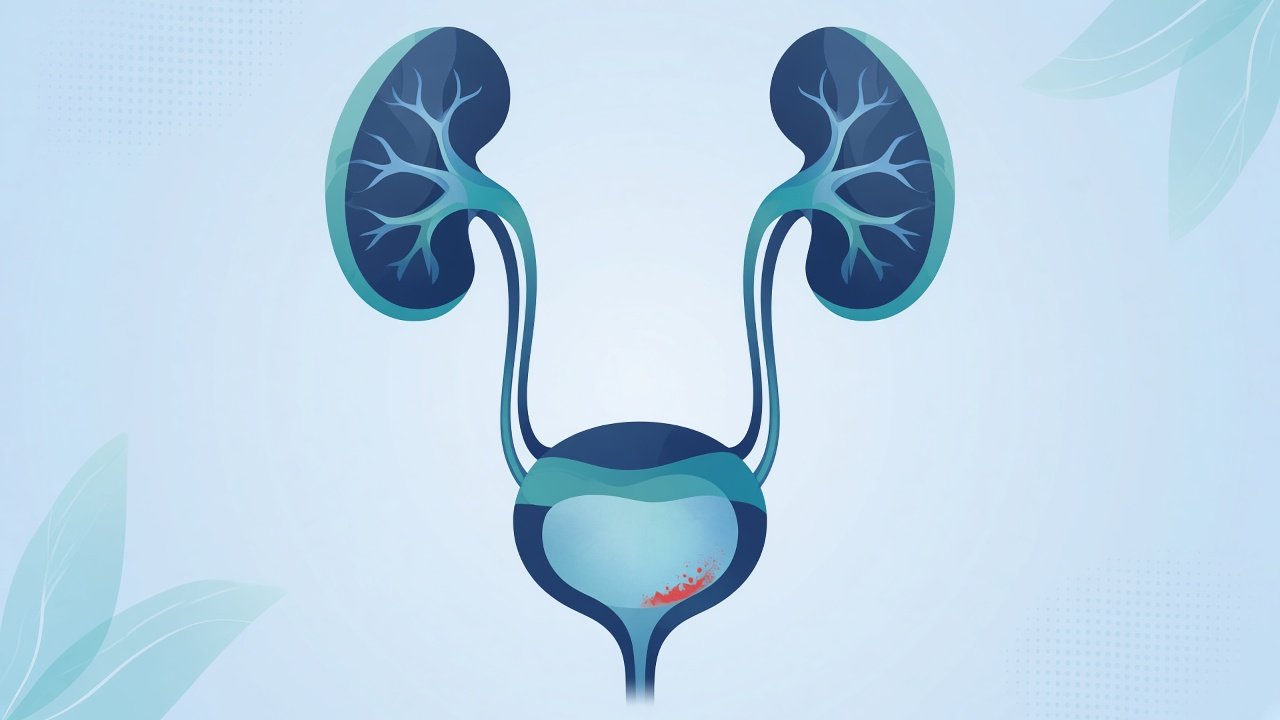
Hematuria means blood in the urine. It may be visible as pink, red, or cola-coloured urine, or it may be found only on a dipstick or microscope. Causes include stones, infection, prostate bleeding, kidney disease, and, in some adults, cancer of the bladder or kidney. Visible blood should be assessed even if it stops. One episode is enough to justify that conversation.
- Visible hematuria. Urine that you can see is pink, red, or brown.
- Microscopic hematuria. Blood cells found on a test when urine looks normal.
- Urgent signs. Clots with inability to pass urine, fever, or severe pain.
- Important point. Bleeding that clears can still have a serious cause.
What counts as blood in the urine?
True hematuria is red blood cells in the urinary tract. Beetroot, some dyes, and a few medicines can colour urine without blood cells. A urine test tells these apart. Menstrual blood can contaminate a sample, so timing and collection matter.
Blood at the start of the stream points more toward the urethra. Blood throughout the stream can come from the bladder, ureter, or kidney. Clots can form when bleeding is heavier.
What are the common causes?
Urine infection, kidney or bladder stones, and prostate enlargement or prostate inflammation are frequent. Vigorous exercise and minor trauma can cause short-lived bleeding. Kidney diseases that affect the filters, called glomerular disease, are another group and are often paired with protein in the urine or high blood pressure.
Bladder cancer, kidney cancer, and upper-tract urothelial cancer are less common but are the reason visible hematuria in adults is not dismissed. Risk is higher with smoking, certain chemical exposures, older age, and some past treatments. Absence of pain does not rule a tumour out. Many tumours bleed without pain.
Which tests are used?
The first step is a urine analysis and, when infection is possible, a culture. Blood tests may check kidney function. Imaging of the kidneys and ureters is often an ultrasound or a CT urogram, depending on age, kidney function, and pregnancy.
Cystoscopy, a camera look inside the bladder, is frequently recommended for adults with visible blood once infection is excluded. It is a short procedure used because scans can miss small bladder tumours. Not every young person with a single microscopic trace follows the same pathway. Guidelines individualise that group.
What should you do while waiting?
Drink normally unless you are on a fluid limit. Note the colour, any clots, pain, and fever. Do not start antibiotics left over from an old prescription. If you cannot pass urine, or you have heavy bleeding with dizziness, use emergency care.
If you smoke, this is a useful moment to stop. Smoking is a major risk for bladder cancer and it also slows healing. Stopping does not replace the evaluation.
Questions people ask
I saw blood once and it stopped. Can I ignore it?
No. A single episode of visible blood still needs an explanation. Intermittent bleeding is common with stones and with tumours.
Is painless blood more worrying than painful blood?
Painless visible blood needs a careful search for tumour. Pain can suggest a stone or infection, but it does not exclude other causes.
Does a normal ultrasound finish the evaluation?
Not always. Ultrasound can miss small bladder lesions and some ureteric problems. Cystoscopy or CT may still be required.
Can a prostate be the only reason?
Yes, in some men. That conclusion is safer after infection, stones, and bladder sources have been considered, not before.
Related service page: Bladder stone care.
Educational information only. Treatment decisions need an individual clinical assessment. Outcomes vary. This article does not claim results, rankings, or a guaranteed method of care.