
AI-assisted educational draft published for Dr. Srikanth Munna, MBBS, DNB, MCh (Urology), consultant urologist and andrologist in Hyderabad. This page is general information. It is not a diagnosis or a personal treatment plan.
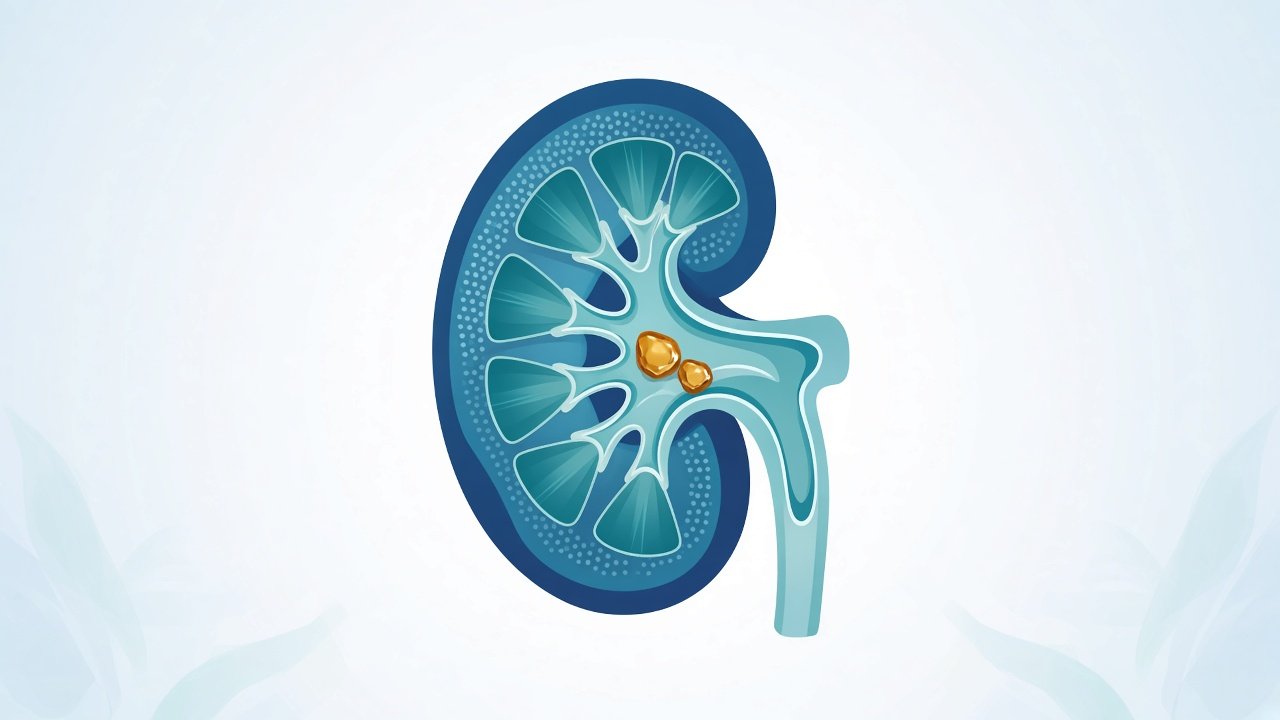
A kidney stone is a hard crystal, often of calcium, oxalate, or uric acid, that forms in the kidney. Hot weather does not create stones by itself. Low fluid intake, concentrated urine, diet, and personal risk do. In Hyderabad, the weeks after peak summer are a common time for people to notice flank pain or blood in the urine because they have been sweating more and drinking less.
- What it is. A mineral stone in the kidney or ureter.
- Common signs. Side or back pain, nausea, pink urine, or a sudden urge to pass urine.
- Same-day review. Fever with stone pain, vomiting that stops you drinking, or inability to pass urine.
- Usual checks. Urine test and an ultrasound or CT scan, chosen for that person.
What is a kidney stone?
Urine normally carries salts that stay dissolved. When urine is too concentrated, those salts can crystallise. Most stones contain calcium oxalate. Others contain uric acid or, less often, struvite related to infection.
A stone still inside the kidney may cause no pain. Pain usually starts when a stone moves into the ureter, the narrow tube between kidney and bladder. The pain can come in waves and may spread from the flank toward the groin.
Why do people in Hyderabad notice stones after summer?
Hyderabad summers are long and hot. Sweat loss without matching water intake makes urine darker and more concentrated. That is a recognised risk for stone formation and for a stone that was already present to become symptomatic.
Local water hardness is often blamed. Evidence that hard water alone causes stones is weak. Fluid volume, salt intake, and a personal or family history of stones matter more. A urologist can interpret a stone analysis or a 24-hour urine test when those tests are appropriate.
Which symptoms should not be watched at home?
Seek urgent care if stone-type pain comes with fever or chills, if you cannot keep fluids down, if you pass very little urine, or if you have pain from a single working kidney. An obstructing stone with infection can damage the kidney and needs prompt treatment.
Blood in the urine, even if the pain settles, still deserves an explanation. Not every episode of flank pain is a stone. Infection, muscle pain, and other abdominal conditions can look similar.
How are stones evaluated and treated?
Evaluation usually starts with a history, examination, and a urine test. Imaging may be an ultrasound or a low-dose CT scan. The choice depends on pregnancy status, kidney function, and how clear the diagnosis already is.
Many small stones pass with pain control and fluids. Larger stones, stones that block the kidney, or stones that do not pass may be treated with shock-wave lithotripsy, ureteroscopy, or percutaneous surgery. The method depends on stone size, location, and the person's health. No method suits every stone, and recovery time varies.
What daily habits lower the chance of another stone?
Drink enough fluid that urine is pale yellow through the day, including evenings. Spread intake rather than drinking a large amount once. Limit excess salt. Do not start high-dose vitamin C or extreme diets without medical advice. If you have already passed a stone, keep it for analysis if you can.
People with repeated stones may need blood tests, a review of medicines, and sometimes a metabolic urine study. That plan is individual.
Questions people ask
Can I diagnose a kidney stone from pain alone?
No. Pain suggests a stone but does not prove one. Urine testing and imaging are used to confirm the cause.
Does beer or a home remedy flush every stone?
Extra fluid can help some small stones move. Alcohol, unverified powders, and forced home remedies are not a treatment plan and can be harmful if a stone is infected or blocking the kidney.
How much water is enough in Hyderabad heat?
There is no single litre target for every adult. A practical check is pale-yellow urine through the day, with more fluid on days of heavy sweating, unless a doctor has limited your fluids.
Will every stone need surgery?
No. Many small ureteric stones pass. Surgery or a scope procedure is considered when a stone is unlikely to pass, is causing blockage or infection, or keeps causing pain.
Related service page: Kidney stone treatment.
Educational information only. Treatment decisions need an individual clinical assessment. Outcomes vary. This article does not claim results, rankings, or a guaranteed method of care.